Showing posts with label SET UP GROW ROOM. Show all posts

12/8/13

Upgradeing Lights in the Mother Keep Grow Tent

Hi doc, looking to change out my lighting setup to something new.
I'm running t5 four bulbs 4 feet long which came with the motherkeepergrow tent from htgsupply.com.
I veg/flower in the same tent, but would like a stronger light for flowering only and not sure what to use. I’m sure 1000 watt lights would burn my  tent.

Just looking for ideas I have five plants only.  Thank u

Hello,
  You could get a 1000 Watt with ductwork andventilation, they have lights where the bulb is encased in glass connected to the duct work, and plants can grow almost right up to the bulb.  But, if you switch to an HPS, you may run out of room because your plants will probably get taller than they did under the T5.  So, if I were you, I'd get an LED.   You may want to get two 135 W LED's and put them in the grow tent about 2-3 feet apart.  I love the T-5's and use them to start my plants, but your plants will really flower better under an LED.  Get a 7 band, not a single color LED.  I think you'd be better with two smaller LED's than one big one, unless you wanted to also get a light mover but that might take away from some of your space.
I hope this helps.
Good growing
Dr. E.R. Myers

11/14/13

Pruning Plant Tops - Plant Hormones and Plant Growth Patterns.

If you read my post on how plants grow, you know that most plants (other than grasses) grow from the top, (specifically in an area called the apical meristem) and I mentioned in this post  some ways this knowledge can help you be a good grower.  There are other ways this knowledge can help with plant growth.  The apical meristem (link to plant growth article) is also where many hormones are created/secreted.  If you cut  off the top of a plant, most of you know the plant will get bushier.  I often do not recommend doing this*, as it stresses the plant to have its apical meristem removed.  Cutting plant tops can be necessary with some growth methods (read my post on the sea of green technique). 
The physiological reason why plants get bushier when the top is cut off or bent is that one of the hormones that will be no longer made by cutting the top of the plant used to prevent the branches from growing, this is termed apical dominance.  Without the plant top, the branches will be grow at an increased rate from their meristem tissue, termed secondary meristems.  This means each branch will elongate, and each branch will secrete more hormones.  In some plants, one of the branches will become ‘dominant’ and suppress growth of the rest of the plants, making the plant start to grow tall again.  Other plants will just become bushy and will have lessgrowth in height.
Good growing,
Dr. E.R. Myers

* I more often recommend bending the top of the plant, this will slow the hormones, and make the plant more bushy (less tall) without the stress of recovering from cutting off the top.  The benefit is that bending  does not result in several days where the plants do not grow because the apical meristem was lost and the growth hormones, are gone.


11/10/13

The Down Side of LED’s

If you have read my blog from the beginning, you know I’ve gone from thinking the best light is an HPS, to using LED’s and loving them.  The intensity of the tri-band and seven-band LED’s from HTGSupply.com have proven to be awesome at growing plants indoors.
No one light is going to be the best for everyone everywhere.  A friend of mine has a detached garage, and I helped him put in a 10x10 grow room in the garage.  The garage gets hot in the summer, and he is thinking about putting in an A/C unit.  I suggested he just grow outdoors in the summer and save electricity.   I also suggested when he wanted to try something different he use LED’s instead of the 1000 W HPS he had.  The plants are growing great.  However, what he’s noticed as the weather gets colder is that the often unwanted heat of the HPS was needed in the grow room.  The HPS was run at night, and keept the grow room in the 60’s on cold nights.  This week he noticed that the room was getting down into the 40’s when it was in the teens.  40’s won’t kill plants, but it can stress them out, and will really slow down growth.  Worst of all, winter is just getting started.  So, if you are in a situation where the heat from an HID is necessary to keep the room warm in the winter, then you may not want to switch to an LED.
Good growing,
Dr. E.R. Myers

12/10/12

300 W LED vs. 400 W HPS


I got an E-mail from a reader that asked me not to use her name. She had been using a 400W HPS for many years, but decided to give LED’s a try, for the energy conservation, which is good for the environment, but the fact that LED’s don’t need new bulbs every 2 years, also means less resources are used, another financial and environmental benefit. She told me that she harvested a little bit MORE using the 300 W Tri-Band sold by HTGSupply. More importantly, she said she did not have to tie down the plants which used to grow overly tall and lanky when first put under the HPS. (Read my post on HPS and flowering) I love getting these E-mail’s as well as questions about growing. I enjoy growing and helping others and we can all learn from each other. If anyone else has made the switch from HPS to LED, let me know the results.  In my 2010 post comparing LED and HPS,  I suggested to use an HPS over LED for flowering, after using the LED's from HTGSupply, I now think LED's are comparable even during flowering

Good Growing,
Dr. E.R. Myers

6/27/11

Setting up a closet grow space -1


I have written about setting up a grow space before (Set up 1 and Set up 2  and Set up 3)
The first ting you should do I think is put plastic down on the floor if you are going to grow indoors. I like to use a closet so that I can control the light cycle. You can also use a grow tent  if you don’t have a spare closet. However, my main grow area at my college is open to the sky via windors/skylights and I use a 600 W HPS as supplemental light for my tropical plants. No matter what light cycle I put the 600 W light on the plants follow the suns cycle. After you put down the plastic you should go inside your grow area and look for light leaks…. Tiny little holes. Wait a minute or three with the door closed for your eyes to adjust and then look for any light leaks. You can take a marker in with you and mark where you see light and then seal the area better where the marks are.

The reason you need plastic is because plants need water, and growing indoors means you have to water them and humans make mistakes (water will spill). Water in carpet like I am showing here will 1) stain the carpet and more importantly 2) can lead to mold growth. Neither is recommending for good growing.

Measure the closet or grow area and if there are walls (you are not growing in the middle of a room for example) then add an inch or two to the length and width. You will want some over lap so that you can tape the plastic to the wall. You do NOT want the plastic to be a few inches short since this can mean dirt and water can get under the plastic to make a great environment for mold growth.
Once you have plastic on the floor and have checked for light leaks, it is time to hang electrical stuff above plants if possible. I hope everyone knows water and electricity do not mix.

Good Growing
Dr. E.R. Myers

1/2/11

The Right Height for Your Light

One thing you want to do is make sure the light you use is at the right height.  The light source is the single most important factor in good growing.  For fluorescent lights with big bulbs (T-8 or T-12) you want the plants as close as possible, within a cm (1/2 inch).  These are good lights to start seedlings under or to start growing indoors with but you can't really grow plants over one foot tall with these lights. When you move up to a high output fluorescent T-5 you can have the plants a bit further (several inches) from the light.  With LED or HID you can have the light even further from your plants as the light intensity is much greater.  The further from your plants the light is the larger an area you can grow in.  However, the energy of light decreases over space so if you have the light too far from the plants you will get tall lanky plants that are trying to grow up to get closer to the light source.  You need to find the best height for your plants and your grow environment.  I blow air cleaned by a carbon filter right at the reflector and bulb of my 400W HPS and this allows me to keep the HPS light only about 1 foot above plants.  With HID's the limiting factor as to how close to have the light to the plants is usually heat, these bulbs emit a lot of heat and you must keep them 1-2 feet above your plants or the heat will harm your plants.  You can look for brown leaf tips as a sign of high heat stress.  I sometimes put a 600W HPS several feet above a lot of plants that get some secondary light through a window.  This light and the hour of sunlight on sunny days is all I need to have happy healthy plants in my solarium.  LED's do get hot too, but not as much as an HID.  WIth LED you can have  them two feet or more above the plants, but the closer the light is to your plants the more intense the light.  More intense light will speed up the growth rate, and the flowering rate, so long as the lights don't burn your plants

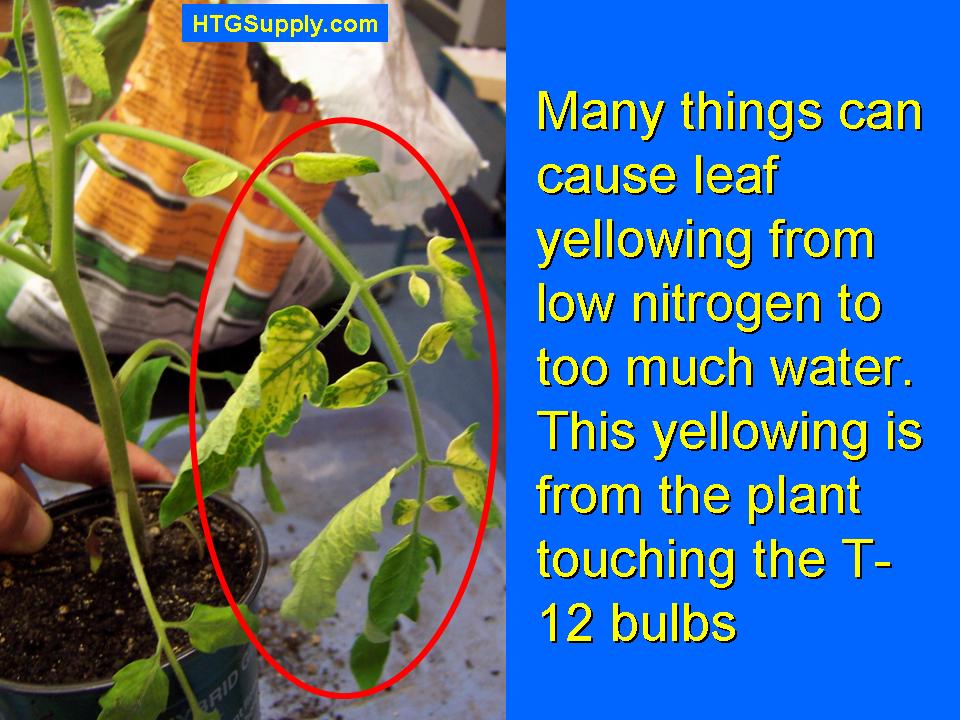
If your plants do grow too close to the light you will have tissue damage, with low energy fluorescent you will get yellowing with T-5 and HID you will get wrinkled leaves or  brown leaves and branches (DEAD) on the parts of the plant that are close to the light.


11/11/10

Day light savings, a timer and your life schedule

This year I have my home garden flowering 10 pm ‘off’ 10 am ‘on’. I like this because a couple days a week I get home at 9 and I like to unwind by watering, caring or just staring at my plants. With day light savings, I went down stairs after work and the light was OFF. Ohhh man. It took me 3 days to remember to alter the light back to my schedule and I figured this was a good topic to write about.

So, what is the best way to get your plants back on your schedule? Well, you could just leave the light at 9 pm ‘off' 9 am ‘on’, but I don’t like that. So, the second choice is deciding if you are you going to shorten a day or lengthen a night. It won’t make or break your growing but I would recommend having a longer night. I say this because as you may know plants keep track of day length with a molecule called phytochrome. There are two forms of phytochrome, light and dark. Light energy makes light phytochrome, and light phytochrome changes to dark phytochrome without light. The ratio of light to dark phtochrome molecules is what triggers a plant to flower. So, if you lengthen the day by an hour, you will have more light phytochrome than dark which may confuse the plant and if you are already stressing plants with too much nutrients, or light contamination at night etc. this added little stress might be the final straw that makes your plants have problems.

What I did is changed the on time an hour, so that the light would come back on at 10 am. This gave my plants a 13 hour ‘night’, which if anything would speed up the flowering response. Then, the next day with the lights on I moved the lights off time back an hour and now I am back to my original time of on and off.

Good Growing,
Dr. E.R. Myers

3/31/10

More on carbon filters, heat and CO2

One more note on carbon filters 

I will start off with a warming that I should have mentioned in the last post about carbon filters  humidity KILLS carbon filters by making the carbon damp and ineffective. You want to keep the humidity low for the carbon filter but most plants will have leaf tips burn with humidity lower that 30%. The burnt tips won’t dramatically reduce growth but is a sure sign you are on the edge of a good growing environment.

While I am talking about carbon filters I should mention they can be used in two ways: either to clean ventilated air or to clean air that is circulated in the grow area. In the first method, garden air goes through the filter (and possibly through an air coolable reflector) and ventilates outside the grow room. It is basically a filter for your ventilation system. Another way is to use the carbon filter as a "scrubber" (how I use it) where the air is blown back over the plants which helps keep plants sturdy and allows them to maximize CO2 intake for maximum growth. This also gives the filter plenty of chances to remove any odor from the air. I do not have a problem with heat build up because I have a large grow area. If heat is a problem you may need to ventilate the hot air (Always vent from the top of the grow area where heat accumulates)

CO2 -- The scrubber method is good if you use CO2. It is good to have airflow in the grow area with CO2 because it is heavier than air and will accumulate on the floor unless you have some air flow to keep mixing your grow area atmosphere. If you are going to vent the hot air out and you are using CO2 it is imperative that you only run the ventilation fans when absolutely needed to not waste precious bottled CO2 gas. The CO2 should be turned off when the ventilation fans are on. If you are going to ventilate the air and use CO2 you will need a controller that only turns the ventilation fan on when the temperature/humidity gets too high. (HTGSupply.com sells those controllers and even a CO2 infrared sensor that turns off the CO2 once it reaches 1600 ppm). For questions about specific equipment you should send questions to the sales manager Perry at Sales@htgsupply.com
Good Growing,

Dr. E.R. Myers

2/9/10

SET UP III Plant size, spacing and pruning

There are many types of plants you can grow indoors so there are many genetic differences in growth rate and potential size. No matter what plant you grow, you can affect growth. If you keep the plants in small containers  you will make plants smaller. You can induce your plant to flower earlier making the plant smaller. If you want larger plants you keep them in larger containers and let them grow large before inducing flowering. Plant size is controlled by specific genes so it is something that is easy to include in a breeding  program, if you are interested.

There are many different opinions on how much space a plant needs. Basically, the closer you space your plants the less room they have to grow. So, you have two choices grow many small plants close together or several large plants spread out. You need to decide what type of plant spacing will work best with the light and area you have. In general, the total growth in a room with many smaller plants will be greater than a few larger plants. This may not be true with all plants, some may not be able to grow in small spaces and flower/fruit successfully.

The final height of the plant also determines the space needed. A 10 foot plant will need at least 4 feet diameter of space to grow; a 4 foot plant will need 1 foot diameter etc. You can prune or train plants to be smaller and fit into your grow area if their growth habit does not exactly fit your grow space.

With pruning again there are two basic ideas -- prune the plants and don’t. I don’t like to prune, removing leaves is bad as the leaf is an organ of a plant that makes sugars to provide the plant energy.  I think what I don’t like is that people think pruning will make a plant grow better. It won’t. It will make a plant grow the way you want it to, with a specific shape or size, which may be better for you but is not for the plant. If you don’t prune your plants indoors you should have an HID like me that emits light that can penetrate several feet. If you do not have an HID, you may find it better to prune plants so that the plant grows directly under the light. Another option I like is to tie your plants down instead of pruning. This leaves the leaves on the plant to gather light and keeps the plant in the area you have to grow it in.

Good Growing,
Dr. E. R. Myers

2/6/10

SET UP II reflection and air flow

Once you have the space chosen you need to do and think about a few things before you put the plants in there.
1st Clean --  I know this is not going to be the most fun part of growing but it is important and can help reduce countless problems later. This is going to be the home of your plants so clean out all dust, debris, and wipe down every surface (walls ceiling and floor) with warm soapy water. If you have had pests or disease use 5-10% bleach or hydrogen peroxide or isopropanol. Plants give off moisture so if you think you can continue to use your closet as both a closet and a grow area you better think about how humidity will affect the things other than plants you keep in the closet. (See ventilation below)
Reflective surfaces – The amount of light that hits the plants will increase growth and you can greatly increase the light getting to the plants by having reflective surfaces. This is extremely important with HID compared with the more linear light put out by LED”s and fluorescent lights. Some good reflective materials are mylar,  flat white paint, aluminum foil, cardboard or plywood painted white, or even white cloth. You should try to cover all areas so that all the light gets reflected around until it is absorbed by the plants. Everyone thinks to cover the walls, but the floors and the ceiling should be made as reflective as possible too. Light can travel 186,000 miles per second so it can bounce around on many things in your closet. If you think you don’t have any reflective material I bet you have aluminum foil in your house right now (Even if you don’t have it you can get it with a few coins at the grocery store so go get some and notice the difference). Good growers use wide heavy duty aluminum foil in areas that won’t be disturbed and use cloth or plastic curtains where you will have to move the reflective material to get to the plants. It is easier to hang foil vertically (up and down) than horizontally (left to right).
Ventilation Most people think to ventilate to remove humidity and heat but most importantly you should do it to provide your plants a fresh source of CO2. I have grown plants in a closet without true ventilation. I would open the door each day to refresh the air and I had a small fan in the closet (It was 3x4 roughly). That is all it takes is light air movement and occasional refreshing of air to grow plants bigger and better.

One thing I like to use for ventilation is a carbon filter. You can run one in your grow room and direct the airflow over your plants at the bulb to increase airflow and reduce heat around the plants. The added benefit is the carbon filter cleans the air of many fungal spores and other diseases.

Good Growing,
Dr. E. R. Myers

1/26/10

SETTING UP A GROW ROOM -- I

I often try new things in my grow areas in my attempt to improve how I grow plants. If you are starting a new area or maybe thinking of a change to try to improve your growing this and the next couple posts are good posts for you to read. As always, please feel free to post any helpful comments.

Almost any area can be converted into a grow space with a light from HTGSUpply.com, from a shelf (link) to a closet, to an extra room.  I have worked in a few greenhouses that supplement natural light with artificial light. For most growers the ideal area will be over 6 feet high and about 7x7 feet which is about 50 square feet. Square footage is figured by multiplying the length of the floor by the width. Fifty square feet is around the maximum area I would recommend a 1000 W HID to cover efficiently. With certain reflectors you will be able to use a 600 W for about 30 square feet. Smaller spaces can use 400 W HID, LED’s or fluorescents. (See me growing using an LED)  Usually gardens become more efficient the larger they are. What I mean by efficient is you can grow more plants and get higher yield per square foot the larger the area and the more lights you use. However, as your area increases in size moisture build up, electricity use and heat are going to be problems and will eventual limit your growth.


Things to think about before you start. -- A real limiting factor is whether there is electricity in the area. When I was in college and just started growing indoors I found an apartment that had a plug in the back of the bedroom closet, when I saw that plug I knew I’d found my new home. You need to know what wattage light you are going to use and where you will plug it in at (This depends on the size of the room and/or the size and number of plants you want to grow). Not every closet has an outlet and extension cords are not usually recommended for long term use. If in doubt contact an electrician about putting in an outlet. Thinking about electricity leads to the second thing you must consider before you start: water. Water is going to spill so put down a tarp. You can also use thick plastic to keep water off the floor. Make sure you tape the plastic up on the wall or floorboard molding so that water does not seep under it on the edges. If you are not careful with water you can have mold growth which can cause damage to your home (and possibly you) as it leaks through the floor boards to come out on the story below. I can tell you from personal experience that it only takes a small amount of water (less than 1 gal) to leak through the floor to the next story. Be careful and plan for water before you start.


I am sure you are aware that water and electricity don’t mix. Make sure all wires and electrical equipment are up off the floor or even better stored above the light because, yes I’ll say it again, no matter what you think you will spill water.


If you are using a basement, keep in mind moisture and humidity tends to be higher here and may have to be reduced to keep mold in check.  Also, concrete and other floors in basements and garages tend to be quite cold. You should cover these with insulating material like Styrofoam. I know you can buy 4x8 sheets of Styrofoam like insulation for walls at most any hardware store. You don’t NEED to buy anything; you can use wood planks or wood pallets or anything that keeps the containers the plants are in off the floor. The soil temperature should not drop below 50F and would be better in the upper 60’s.
Good Growing,
Dr. E.R. Myers